
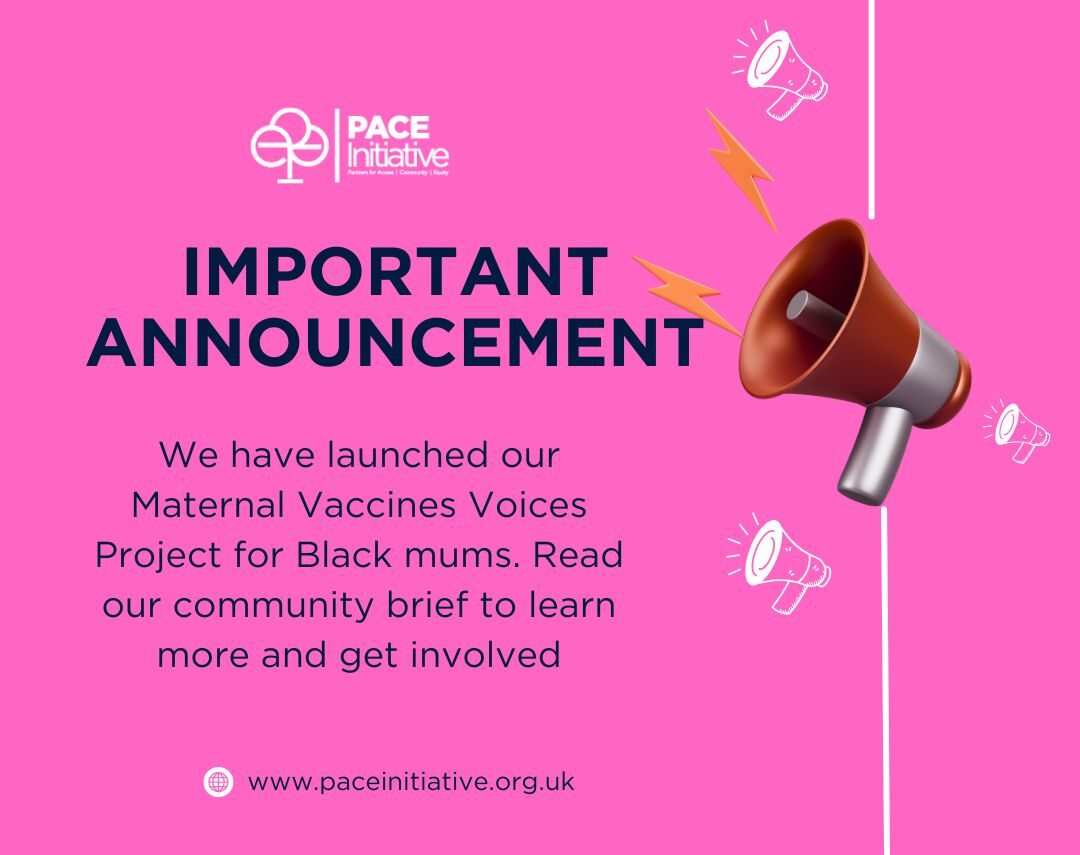
Pregnant women or new mothers in Luton & Beds, sign up to our Maternal Vaccine Voices Research Study
 Featured
“When communities lead, research becomes real, relevant, and ready to make a difference.”
At PACE, Community Engagement and Involvement (CEI) means more than just consultation — it’s about active, meaningful partnerships with the people who are most affected by research. We use participatory approaches to ensure communities are not just research subjects but equal collaborators in shaping the work from start to finish.
CEI is the heart and soul of global health research. As Dr Tedros, Director-General of the WHO, noted in 2023, it ensures research is not only scientifically sound but also socially relevant and culturally sensitive. By placing communities at the centre, we build trust, increase impact, and create solutions that genuinely work in real-world contexts.
In CEI, community refers to the people directly affected by a research issue — whether or not they are participants in a study. They may also be stakeholders, meaning individuals or groups with an interest in or influence over what research is done and how it is carried out. The public is a broader group, including both communities and stakeholders, who have a general interest in research and its role in society.
We draw on established participatory models, including:
Participatory Action Research (PAR) – Often led by community-based or non-governmental organisations, PAR ensures those most affected by health and development challenges help define priorities, determine what counts as evidence, and participate directly in the research process (Loewenson, 2014).
Community-Based Participatory Research (CBPR) – Involves community members as equal partners in designing, conducting, collecting, analysing, and sharing research on issues they identify as important (Wallerstein & Minkler, 2018).
Patient and Public Involvement (PPI) – Research carried out with or by members of the public, rather than to, about, or for them (NIHR, 2023).
We recognise that poorly executed CEI risks becoming tokenistic — where communities are consulted in name only, without their views shaping decisions. Our commitment is to authentic engagement, where local knowledge, lived experience, and cultural insight guide every stage of the process.
We commit to:
Partnership – Work with communities, not on them.
Representation – Ensure diverse voices are heard, especially those most affected.
Transparency – Share goals, methods, and findings openly.
Mutual Benefit – Create value for both communities and researchers.
Respect – Honour local knowledge, culture, and lived experience.
Effective CEI also means using media, activities, and dialogue to make science relatable. We aim to spark the “AEIOU” responses to science — Awareness, Enjoyment, Interest, Opinion-forming, and Understanding — so communities feel informed, valued, and empowered to act.
At PACE, CEI is not a box to tick. It’s a way of working that ensures research serves the people it is meant to benefit with their voices leading the way.
 Share Post